Chapter 3: Stillness
CHOOSING PRESENCE PP. 36-38

Summary for Chapter 3
Stillness: Simply Doing What God Told Us to Do
True spiritual transformation begins with stillness. Jim Heaney emphasizes that God’s presence is not something to chase or achieve—it is already here, always accessible when we quiet the mind and step into the present moment. Stillness is not just an absence of noise but an intentional practice of letting go, making space for divine presence to be fully experienced.
Many struggle with stillness because the mind resists it, constantly seeking distractions or clinging to habitual thoughts. However, scripture repeatedly calls for stillness as the gateway to knowing God. By slowing down, observing thoughts without attachment, and surrendering the need for control, a deeper awareness of God’s peace emerges.
Heaney explains that practicing stillness doesn’t mean forcing silence or eliminating thoughts but rather shifting attention away from mental noise and into presence. Breathing exercises, quiet reflection, and mindfulness of daily activities all serve as doorways to presence. Through these practices, stillness becomes more than a momentary experience—it becomes a way of living, deepening the connection to God in everyday life.

Chapter 3: Making Meaning of the Message
Stillness is the foundation of the practice of presence. God tells us in Psalm 46:10 to 'be still and know that I am God.' When we read it, it should become clear to us that it is not a suggestion; it is a command. Therefore, stillness is our foundation. Without it, we will not experience God’s Spirit within us. We will not know the divine in an intimate way. And that is the heart and soul of the practice of presence. The practice teaches us through stillness. It is only when we become still inside that we connect with our vibrant inner life, which is our inner intelligence, and it comes from God’s Spirit within us. That is what we are looking for. We cannot experience the peace of the present moment without some level of stillness inside. That is what builds our inner confidence, our foundation. When we’re dealing with any distress, no matter what it is, our first response should be to bring in stillness. By bringing in stillness, we get a true perspective of our life now because the screen of our ego is not distorting reality. The practice of presence lets us know that we are not alone and isolated. And the only time we do feel alone and isolated is when we are unconscious, living through memory or anticipation, in a compulsively negative thinking state.

Be still, and know that I am God.

The Practicing Presence Journal
Set aside a dedicated space for your reflections on practicing presence—whether it’s a lined notebook, a digital document, or a note-taking app on your phone. Use it to explore the journaling questions provided in the PDF below. We encourage you to revisit these prompts throughout the week and notice how your responses may shift as your experience of presence deepens.
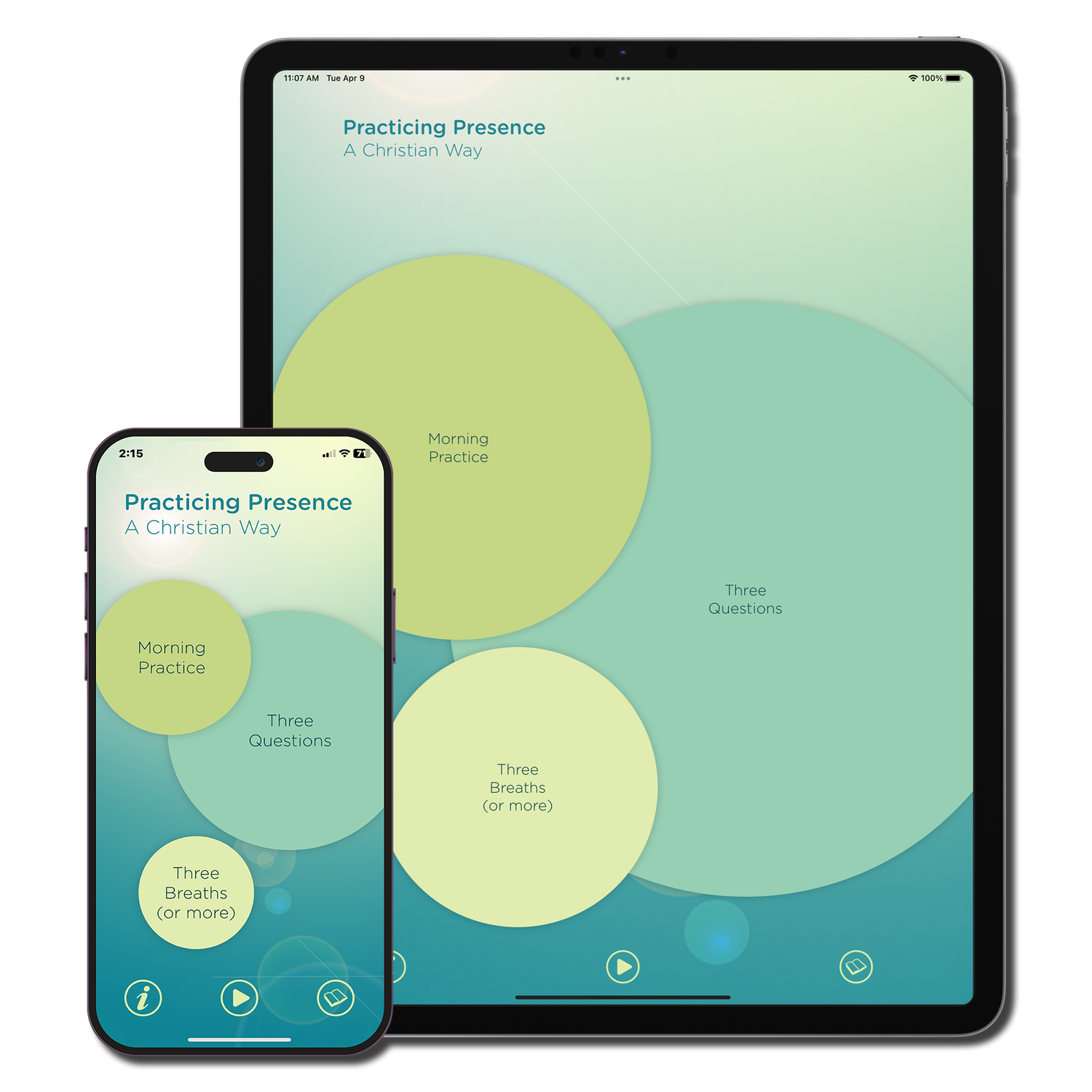
Download the Free
Practicing Presence App
➜ Start with the Morning Practice.
➜ Be sure to enable hourly notifications and reminders.
➜ Simple to install and easy to use.
➜ Check out our download and installation tutorials.




Guided Practice of Presence
The Practice of Presence is about shifting from unconscious, fear-driven thinking to an awareness of the present moment, where God’s peace is always available. Below are step-by-step instructions to guide you through this practice:
-
Sit in a comfortable, upright position in a place free from distractions. Keep the spine straight, and if possible, close your eyes to minimize external stimulation.
-
Before starting, acknowledge the purpose: to quiet the mind, become present, and connect with God’s peace. A simple prayer can help:
“God, all goodness comes from You. Let Your peace flow through me.”
-
Use the breath to anchor awareness in the present:
Take a slow, deep breath in through the nose, filling the lungs completely.
Hold for a brief moment, feeling the stillness.
Slowly exhale through the nose, releasing tension.
Repeat this cycle for several breaths.
To deepen your focus, silently repeat a sacred word like “Jesus” or “Yahweh” on each inhale and exhale.
-
As the inner noise settles, begin to notice a deeper sense of peace. This is where God’s Spirit is most accessible. Rather than striving for an experience, allow presence to unfold naturally.
-
Practicing presence is not just for morning meditation—it’s a way of living. Remember to take three conscious breaths throughout the day.
Ask yourself these three questions:
If I am at peace, do I know why?
If I am not at peace, do I know why?
If I am not at peace, do I know how to get back to peace?
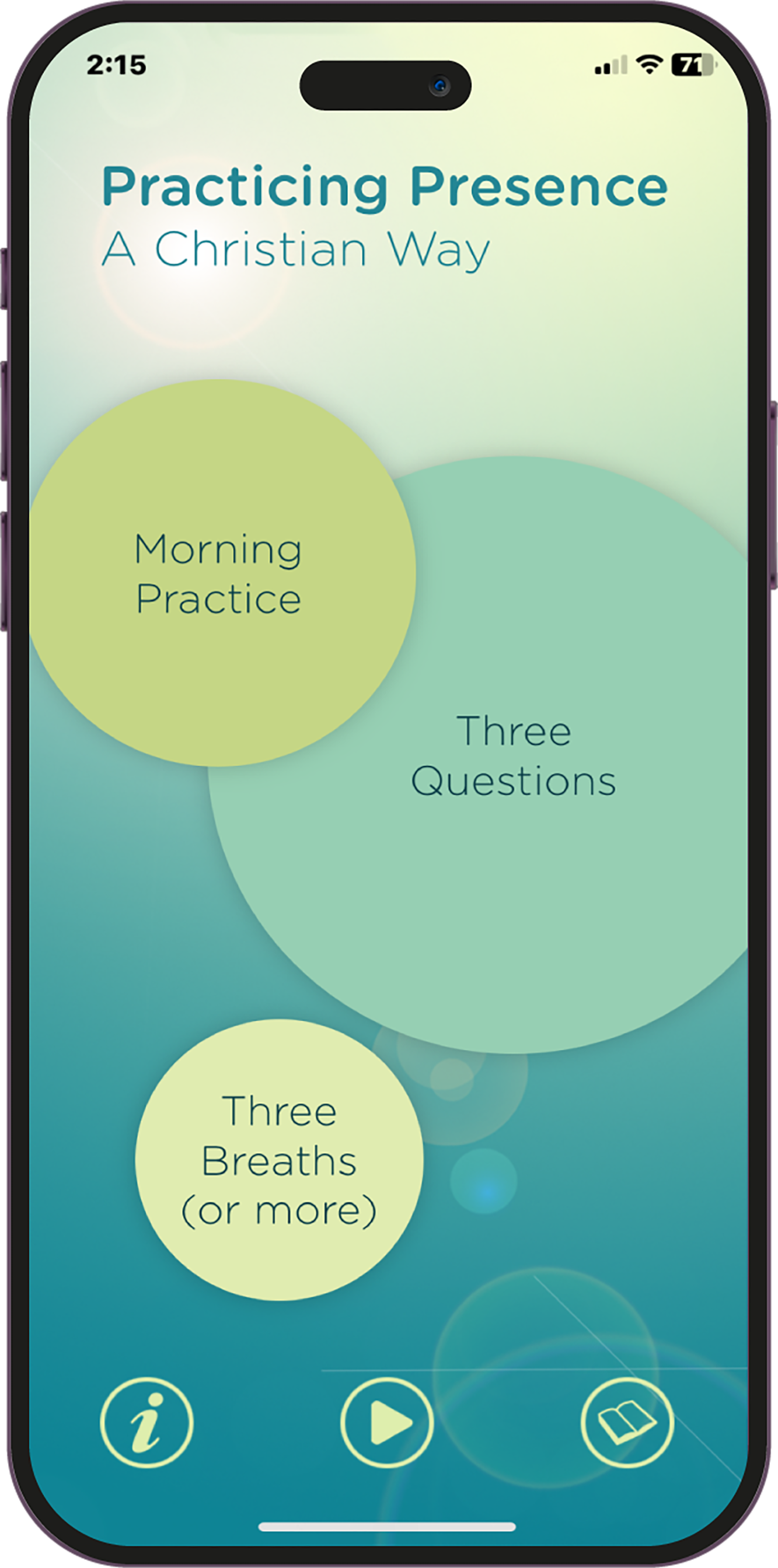
Use the Practicing Presence: A Christian Way App to do the actual practice and the hourly intention.