Chapter 7: The Courage to Stop Negative Thinking and Gossip
CHOOSING PRESENCE PP. 70-71

Explore the distinction between productive thinking and compulsive negative thought patterns, understanding their impact on our wellbeing.
Summary
This section looks at how nonstop thinking—what some call “thought chatter”—can create stress, anxiety, and a feeling of being disconnected from the present moment. Most of the time, these racing thoughts aren’t helpful; they just keep you stuck in worry or distraction. But when you start noticing these patterns, you can take the first step toward quieting your mind and creating more peace and presence in your daily life.

The more we dwell, the less effective we are and the more misery we create—‘we’ become the problem because we have made the problem personal. All problems are life situations that we turn into problems.
— Choosing Presence, p. 71
A Moment for Reflection
Pause for a moment and reflect on the following three questions:
-
This question helps you examine whether you see constant thinking as a sign of control or effectiveness, even when it may be causing stress.
-
This invites you to become aware of the specific thought loops that drain your energy and pull you away from presence.
-
This question encourages you to consider the power of awareness and detachment from negative thinking rather than trying to “fix” or suppress thoughts.


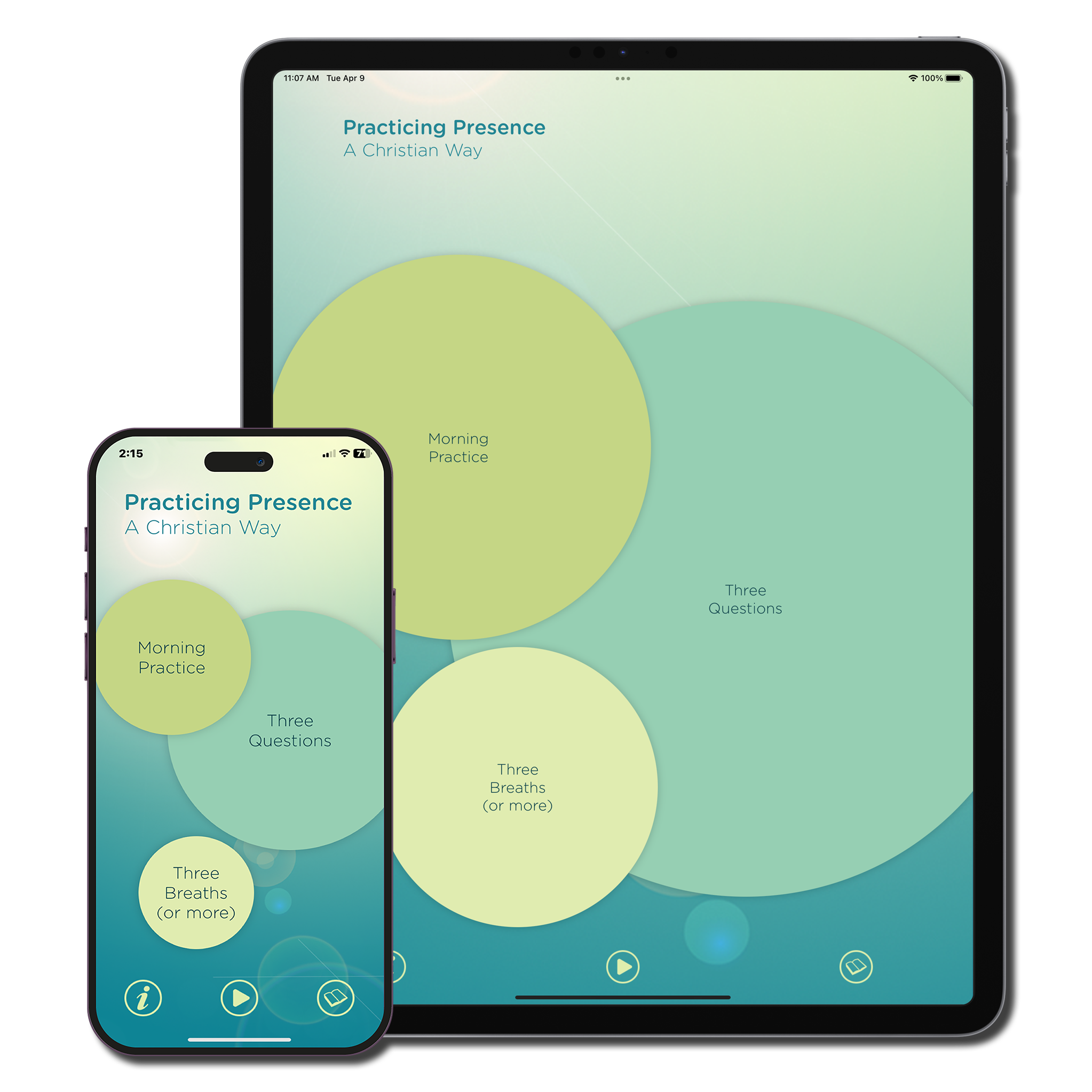
Remember to Download the Free Practicing Presence App!
Start your day with a morning meditation and get hourly reminders to return to presence with three conscious breaths. This free app is an essential tool for deepening your practice and staying connected with God’s presence.

Deepening the Practice: Journal Prompt
Negative thinking often feels automatic, but Choosing Presence reminds us that we don’t have to be trapped in it. Our thoughts are not who we are, and we have the power to step back, observe them, and choose not to engage with negativity. Instead of fighting thoughts or trying to force them away, we can practice noticing them without attachment—allowing them to come and go without letting them take over. By doing this, we create space for peace and presence, shifting from unconscious reactivity to conscious awareness.
Think about a time when negative thoughts took over your mood or actions. What triggered them, and how did they affect your inner state? Now, imagine if, in that moment, you had simply observed those thoughts without judgment instead of getting caught up in them. How might that have changed your experience?