Chapter 5: Inner Conditioning
CHOOSING PRESENCE PP. 51-52

To explore the continuous action required to achieve and maintain inner peace through the practice of presence.
Summary
Finding lasting inner peace isn’t about reaching some final, unshakable state—it’s more like an ongoing practice, a way of showing up to each moment with awareness. This section talks about how making presence a habit—learning to return again and again to the peace available right now—can completely shift your spiritual life. It pushes back against the idea that peace is something you can just think your way into. Instead, real peace comes from experiencing God’s presence within you, not just understanding it intellectually. You’re invited to take a look at your daily routine and notice where you can practice presence more often, making peace a steady part of your life rather than something you’re always chasing.

We all have the ability to experience inner peace for ourselves. It involves committing ourselves to action—not simply thinking.
— Choosing Presence, p. 52
A Moment for Reflection
Pause for a moment and reflect on the following three questions:
-
This question encourages you to examine your perspective on peace and whether you view it as distant or immediately accessible.
-
This prompts you to move beyond theory and identify real, practical steps toward inner conditioning.
-
This reflection invites you to connect with past experiences of genuine peace and consider how to bring that awareness into your daily life.


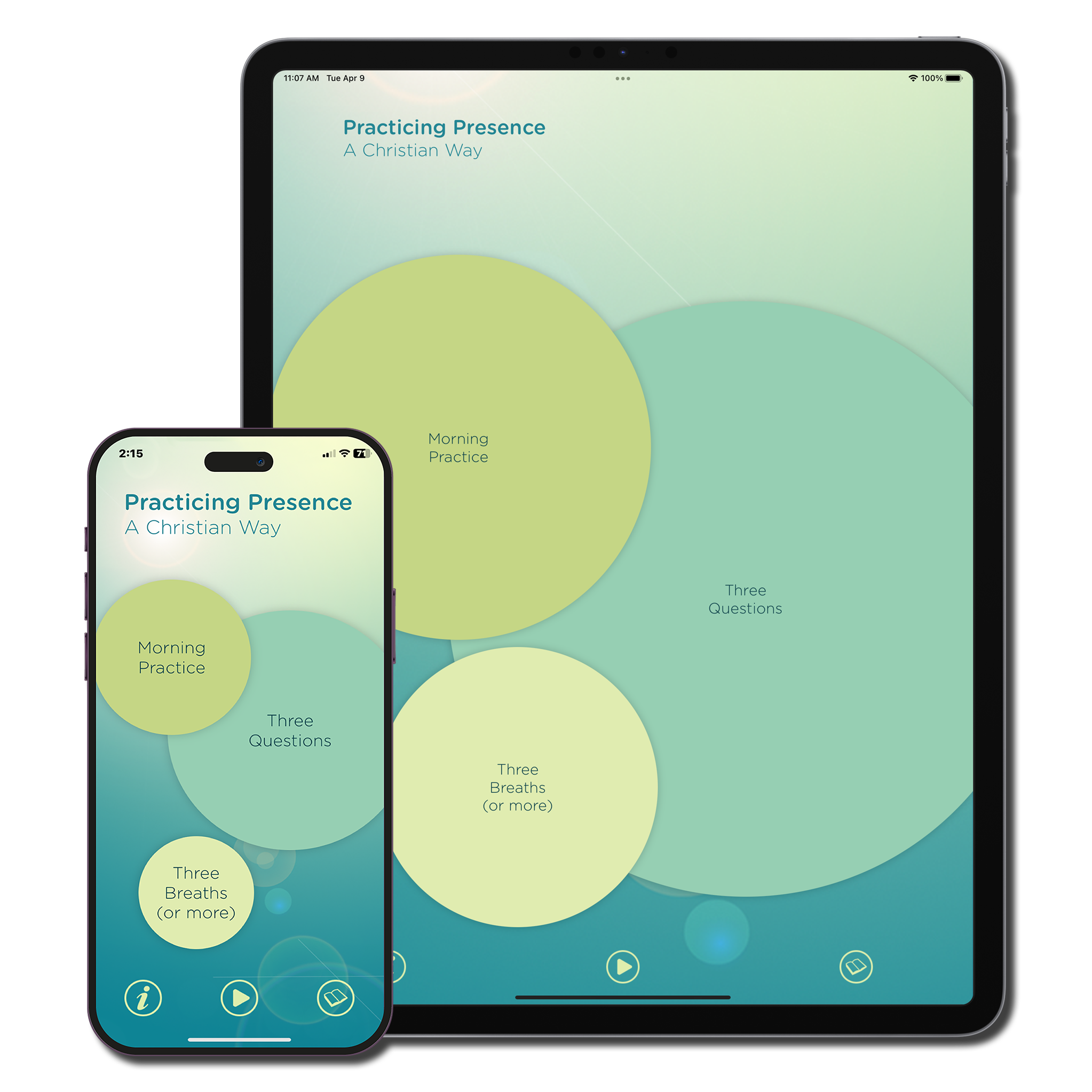
Remember to Download the Free Practicing Presence App!
Start your day with a morning meditation and get hourly reminders to return to presence with three conscious breaths. This free app is an essential tool for deepening your practice and staying connected with God’s presence.

Deepening the Practice: Journal Prompt
Peace isn’t something we passively wait for—it’s something we cultivate through action. Too often, we get caught up in the idea that peace will come when circumstances change or when we finally understand some deep spiritual truth. But true peace isn’t an intellectual exercise; it’s an experience we step into through presence. This section reminds us that we must actively condition ourselves to return to peace again and again.
Think about a time when you felt a deep sense of inner peace. What were you doing? What was different about that moment compared to times when you feel anxious or restless?
Now, consider your daily routine. Where do you see opportunities to practice peace rather than just think about it? Are there habits, distractions, or thought patterns that pull you away from it?
Write about one small action you can take today to make peace a lived experience rather than an idea. How can you remind yourself to return to presence when challenges arise?