Chapter 6: Resistance
CHOOSING PRESENCE PP. 67-68

Summary for Chapter 6
Resistance: Our Main Obstacle to True Peace
Fear is one of the biggest obstacles to experiencing God’s presence. Jim Heaney explains that most fear is not based on reality but is created by the mind, keeping people trapped in anxiety, doubt, and separation. When fear takes over, it reinforces the illusion that we are alone, disconnected from divine love.
Rather than resisting fear or trying to push it away, Heaney encourages meeting it with awareness. By observing fear without identifying with it, a shift occurs—fear loses its power, and a deeper trust in God’s presence emerges. This transformation is not about eliminating fear but about learning to move through it with faith and stillness.
The chapter highlights how practicing presence creates a bridge beyond fear. When attention is grounded in the present moment, fear no longer dominates. Trusting in divine presence, rather than the fearful stories created by the mind, allows for freedom, peace, and a deeper sense of connection to God.

Chapter 6: Making Meaning of the Message
Resistance is one of the biggest obstacles to our peace of mind and to practicing presence. When we resist what is, we are accepting a false reality that we have created in our ego mind. As we practice presence, that becomes very clear to us. What we resist has power over us, but what we accept in nonresistance no longer has power over us. Nonresistance and acceptance free us from the inside so we are experiencing our true life now, rather than reacting negatively to our life situations—all the things happening around our life, in our relationships, in the work we do, financial worries, our security, our inner wellbeing. Then we can have the confidence to deal with them all. But when we dwell on them or obsess over them again and again in resistance, we have taken ourselves out of reality. All the things in our life situation—they come, and they go. They are not permanent. Our life is permanent, eternal, and it is whole, complete, and accessible always. In the practice of presence, we have an alternative, a contrast: Are we going to create our inner fears and conflicts, or accept the peace of the present moment? Nothing in our life situation is as powerful as that peace.

Today, if you hear his voice, do not harden your hearts as you did in the rebellion.

The Practicing Presence Journal
Set aside a dedicated space for your reflections on practicing presence—whether it’s a lined notebook, a digital document, or a note-taking app on your phone. Use it to explore the journaling questions provided in the PDF below. We encourage you to revisit these prompts throughout the week and notice how your responses may shift as your experience of presence deepens.
Download the Free
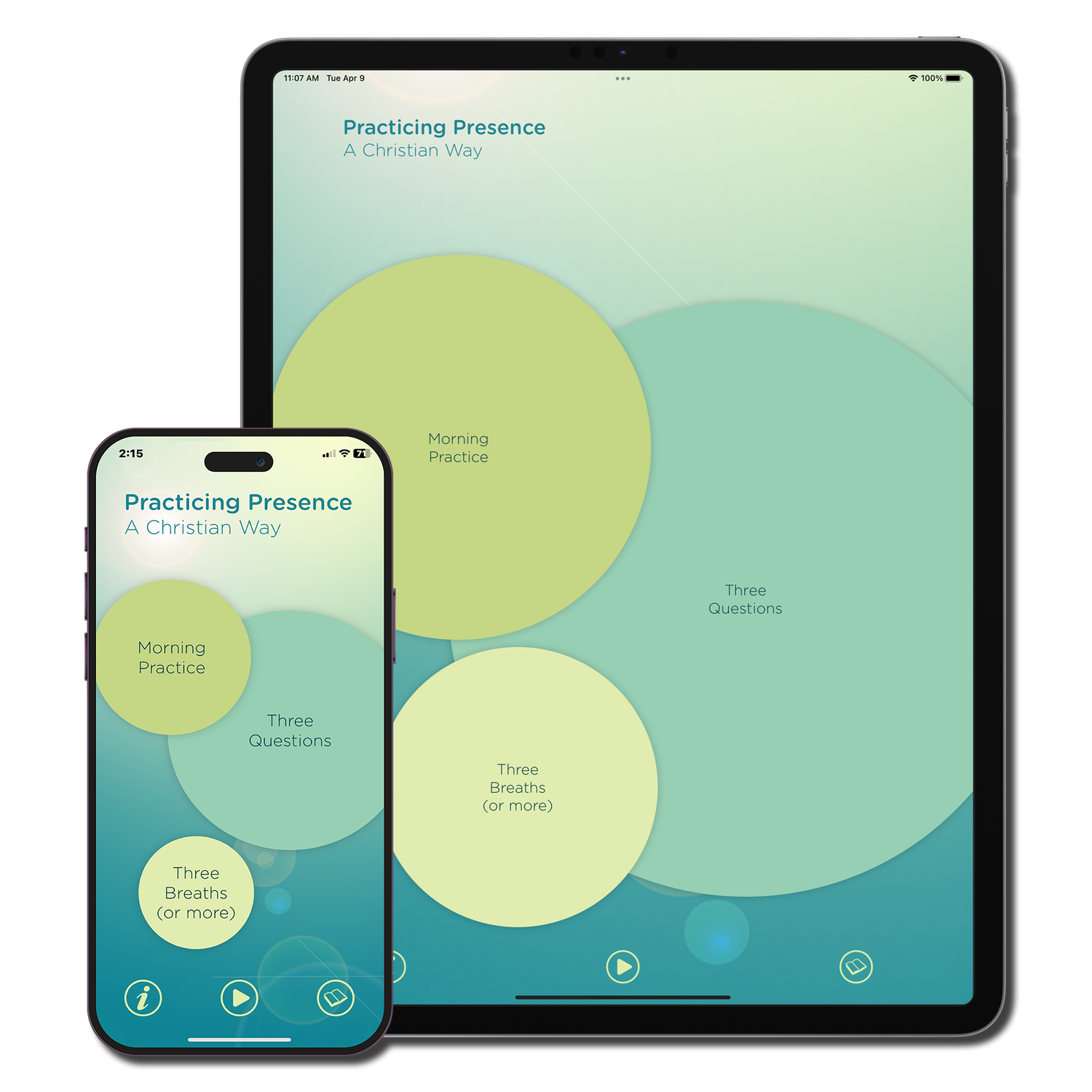
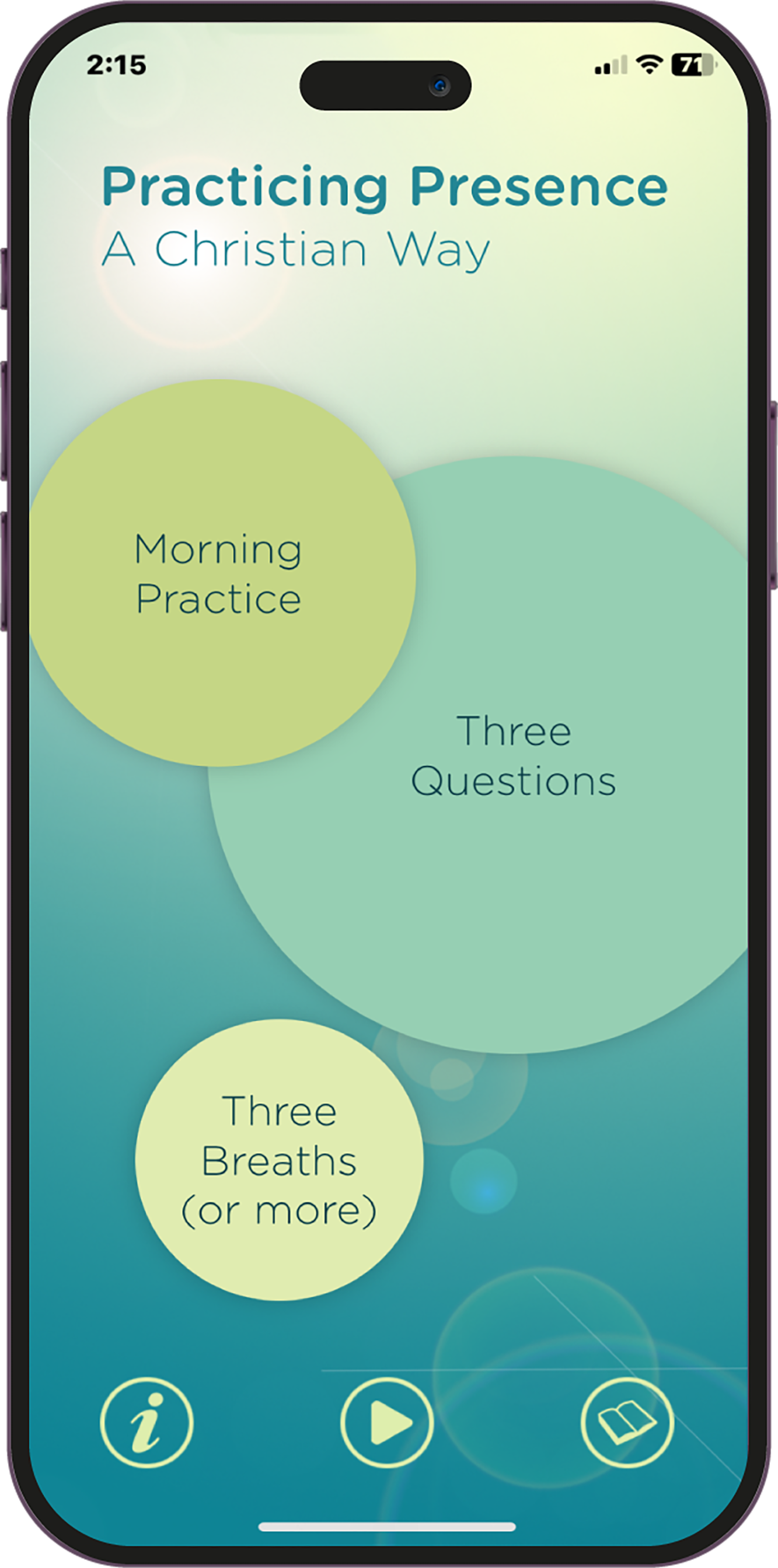
Practicing Presence App
➜ Start with the Morning Practice.
➜ Be sure to enable hourly notifications and reminders.
➜ Simple to install and easy to use.
➜ Check out our download and installation tutorials.




Guided Practice of Presence
The Practice of Presence is about shifting from unconscious, fear-driven thinking to an awareness of the present moment, where God’s peace is always available. Below are step-by-step instructions to guide you through this practice:
-
Sit in a comfortable, upright position in a place free from distractions. Keep the spine straight, and if possible, close your eyes to minimize external stimulation.
-
Before starting, acknowledge the purpose: to quiet the mind, become present, and connect with God’s peace. A simple prayer can help:
“God, all goodness comes from You. Let Your peace flow through me.”
-
Use the breath to anchor awareness in the present:
Take a slow, deep breath in through the nose, filling the lungs completely.
Hold for a brief moment, feeling the stillness.
Slowly exhale through the nose, releasing tension.
Repeat this cycle for several breaths.
To deepen your focus, silently repeat a sacred word like “Jesus” or “Yahweh” on each inhale and exhale.
-
As the inner noise settles, begin to notice a deeper sense of peace. This is where God’s Spirit is most accessible. Rather than striving for an experience, allow presence to unfold naturally.
-
Practicing presence is not just for morning meditation—it’s a way of living. Remember to take three conscious breaths throughout the day.
Ask yourself these three questions:
If I am at peace, do I know why?
If I am not at peace, do I know why?
If I am not at peace, do I know how to get back to peace?
Use the Practicing Presence: A Christian Way App to do the actual practice and the hourly intention.