
The Three Questions That Unlock Inner Peace: A Guide to “Choosing Presence”

In our modern lives, we are often swept away by a "wind tunnel" of compulsive thoughts—worries about the future, regrets about the past, and resistance to the present moment. In his book Choosing Presence, Jim Heaney argues that we cannot think our way out of this suffering; we must live our way out of it through action.

Central to this practice is the concept of Inner Conditioning. Just as we exercise to condition our bodies, we must condition our spirits to recognize the difference between the chaos of the unconscious mind and the stability of God’s spiritual energy.
To build this foundation, Heaney invites us to pause each hour and ask ourselves three profound questions. These are not merely for reflection—they are a diagnostic tool to verify that we have found our way out of suffering.
The Distinction: Peace vs. Presence
Before we dive into the questions, it is vital to understand the relationship between peace and presence. While they are deeply intertwined, they are distinct.
Presence is the action and the state of being. It is the practice of bringing in stillness to stop the inner negative dialogue and grounding ourselves in reality.
Peace, however, is the result and the gauge. Heaney describes peace as the "Kingdom" and the "hidden treasure" within us. It is the unmistakable experience of God's spiritual energy.
Understanding this distinction is crucial because peace serves as your compass. You cannot force presence through willpower alone, but you can use your awareness of peace to determine if you are truly present. If peace is absent, you know you have drifted into the unconscious mind. Therefore, seeking and recognizing peace is fundamental to practicing and finding presence.
The Three Questions
Heaney writes that "there are only three questions that we have to ask" to ensure we are building our foundation on rock.
1. Am I at peace now and do I know why?
The first question establishes your baseline. If the answer is "yes," you know why: it is because you are consciously present. You are in reality, not lost in the "useless negative thinking" of the ego.
Heaney emphasizes that when we are truly present—when we have stopped the noise and connected with our vibrant inner life—we experience a contrast. We realize that the peace we feel is not something we created, but something that was done to us by surrendering to the moment. Knowing why you are at peace reinforces your confidence that this state is accessible and real.
2. If I am not at peace, do I know why?
If the answer to the first question is "no," you must ask why. This question forces you to confront the unconscious self.
Heaney teaches that if we are not at peace, it is always for the same reason: we are living through memory (the past) or anticipation (the future), or we are resisting what is happening right now. We have allowed our ego—which is insecure and fear-filled—to lead us out of reality.
By asking this question, you move from being a victim of your stress to being an observer of it. You recognize that your unease is not caused by the external world, but by your internal reaction to it.
3. If I am not at peace, do I know how to get back to peace?
This is the most critical question of all. Heaney asserts that if we can answer this question through our own experience, "nothing else matters. We are free".
Knowing how to get back to peace means you possess the solution to your own suffering. The method is simple: bring in stillness. You do this by taking three conscious breaths (or more) to stop the momentum of the racing mind and reconnect with the present moment.
This question reminds us that we have a choice. We do not have to accept inner chaos; we can choose to return to the only reality there is—the now—where God’s peace resides.
Practicing Throughout the Day
Heaney suggests asking these questions hourly or whenever you feel stress rising. It is a practice of constant renewal. You cannot rely on the peace you felt yesterday or even an hour ago; you must choose it again right now.
By consistently asking these three questions, you engage in Inner Conditioning. You train your body and mind to reject the "false reality" of stress and automatically return to the sanctuary of the present moment.
As you go through your day today, pause. Take a breath. Ask yourself: Am I at peace? If you know the answer, you know the way home.
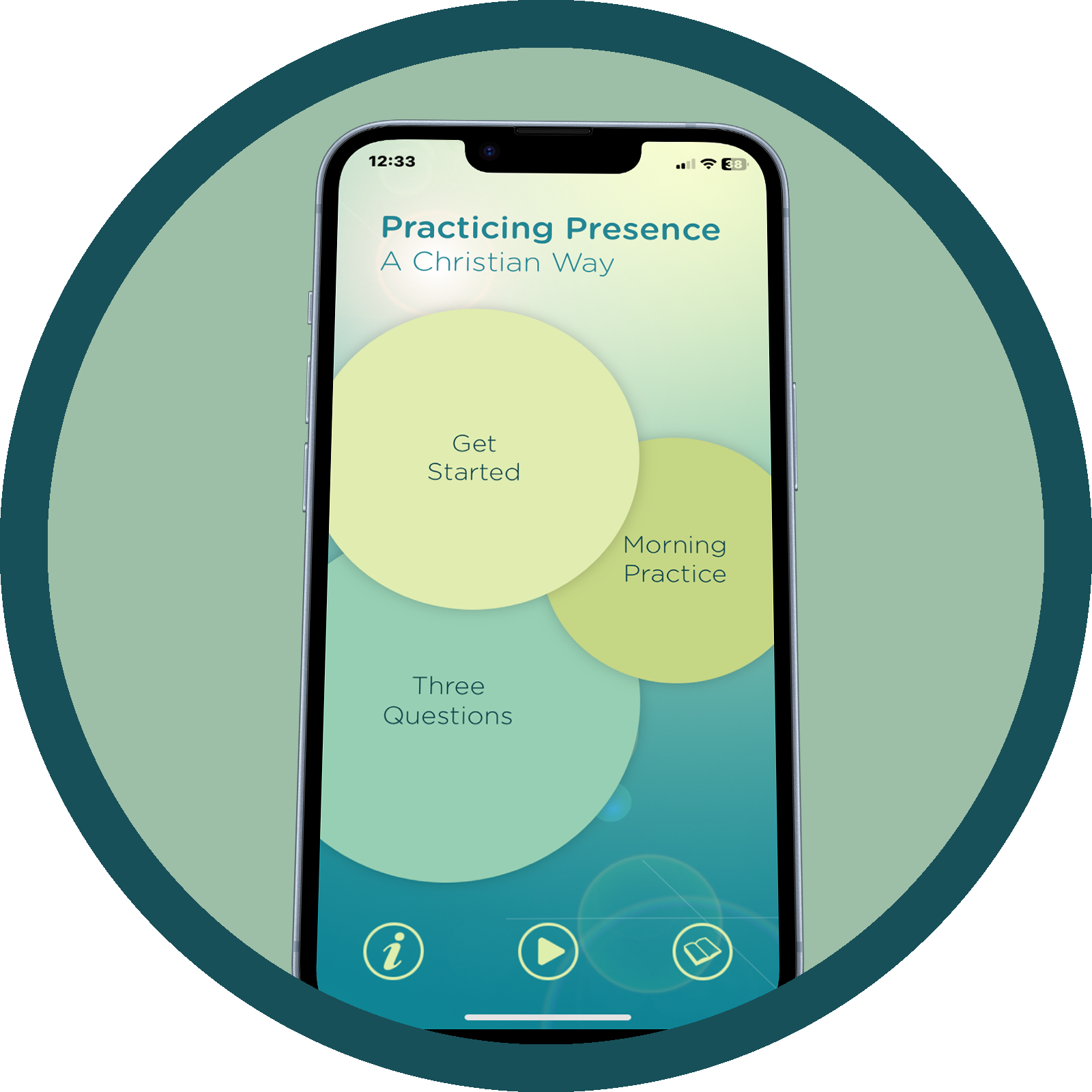
To help sustain the rhythm of your breathing, we invite you to download the Practicing Presence mobile app. Use it to set the hourly reminders that will ground you throughout your day. Set hourly reminders. Nothing more is required. Presence takes care of the rest.
The Practice of Presence is a spiritual discipline focused on bringing stillness into daily life to break the cycle of unconscious negativity. By slowing down the inner dialogue, individuals can move from simply believing in God's presence to experiencing it as a vibrant inner reality. This donation will support Illuman in creating the sacred spaces where men can practice this stillness together.
The Choosing Presence Project provides resources, including a primary text by Jim Heaney and the "Practicing Presence" mobile app, to help individuals cultivate a rhythm of meditation and centering. Based on Christian contemplative traditions, the project emphasizes "living your way into a new way of being" through the experience of stillness. Website: www.choosingpresence.org
Illuman is a community of men who are seeking a life, not just for themselves, but for the world. Founded on the work of Fr. Richard Rohr, Illuman offers honest, authentic conversations and shared experiences to help men find strength, healing, and clarity through the "Journey of Illumination." Website: www.illuman.org
Brian Mueller, Choosing Presence Director of Education & Engagement
