
A Beginner-Friendly Way to Start Meditating
A Simple Beginner’s Guide (Breath, Body, and Habit)
This post is a short summary of “‘The only thing you need is your own mind’: how to start meditating”, written by Madeleine Aggeler for The Guardian (Jan 2, 2025). For full context and the original wording, read the original article directly.
Meditation can feel intimidating because many of us assume it means “clearing your mind.” But the experts quoted in The Guardian emphasize something gentler and more realistic: meditation is about changing your relationship to your thoughts—learning to notice them without being carried away by them. Rather than chasing perfection, the aim is to develop what teacher and author Sharon Salzberg calls “balanced awareness.”
According to the article, these are starter steps—simple enough to try today, and flexible enough to fit different bodies, schedules, and temperaments.
1) Start small (and make it doable).
You don’t need a special room, incense, or a retreat schedule. Start with a short window you’ll actually repeat—five minutes is a perfectly legitimate beginning. If you’re tempted to begin with a longer sit, consider the article’s warning that going too big too fast can make meditation feel like a grind, which makes it less likely you’ll return tomorrow. A simple timer helps, too, so you aren’t mentally checking the clock.
2) Sit comfortably—upright, not rigid.
Find a posture that supports alertness without strain. A chair is fine. A cushion on the floor is fine. The key cues are comfort and an upright spine. Rest your hands where they naturally settle (lap or thighs). Let your eyes be open or closed; if open, soften your gaze on a spot on the floor in front of you.
3) Notice what’s already here.
Before you “do” anything, take stock. Feel your feet on the floor and the weight of your body supported by the chair or cushion. You may notice tension, an itch, or a tingle—no need to fight it. The article highlights a key mindset: mindfulness isn’t about forcing yourself to feel different; it’s about noticing what is present—sensations, thoughts, and emotions—with honesty and kindness.
4) Let the breath be your home base.
Choose a place where the breath is easiest to feel—nostrils, chest, or belly—and rest your attention there. You’re not trying to breathe in a special way. Just notice the natural breath, one breath at a time. If it helps, silently “count” a breath in and a breath out, or simply feel the rise and fall.
5) When your mind wanders, begin again (that’s the practice).
Distraction isn’t a sign you’re doing it wrong. It’s the moment you’re training for. When you notice you’ve drifted into a story, a worry, or a mental to-do list, label it gently (e.g., “thinking”), release it, and return to the breath. Salzberg frames this as skill-building: the ‘reps’ are the returns.
6) If you want it to stick, add support and variety.
If you enjoy the practice and want to make it a habit, the article suggests using support structures: books, podcasts, YouTube talks, apps, or local/online communities. It also notes that meditation comes in many forms—including walking meditation and loving-kindness practice—so it’s okay to experiment until you find what fits.
Why bother? A quick note on benefits and evidence.
The Guardian piece notes that research links mindfulness meditation to benefits for anxiety, depression, and sleep. For example, it links to a randomized controlled trial of mindfulness-based stress reduction for generalized anxiety disorder (Hoge et al., 2013/2014, J Clin Psychiatry) and a Harvard Health review discussing mindfulness approaches for insomnia.
It also references a well-known set of experiments suggesting many people find “just sitting with their thoughts” surprisingly difficult—including research popularized as “some people would rather give themselves a mild electric shock than sit quietly for 15 minutes.” A University of Virginia news release about that line of research offers an accessible overview of the findings.
If you’re new to meditation, consider this your permission slip: start small, keep it simple, and treat wandering attention as normal. The goal isn’t to win at silence—it’s to return, again and again, to the present moment.
References & Links
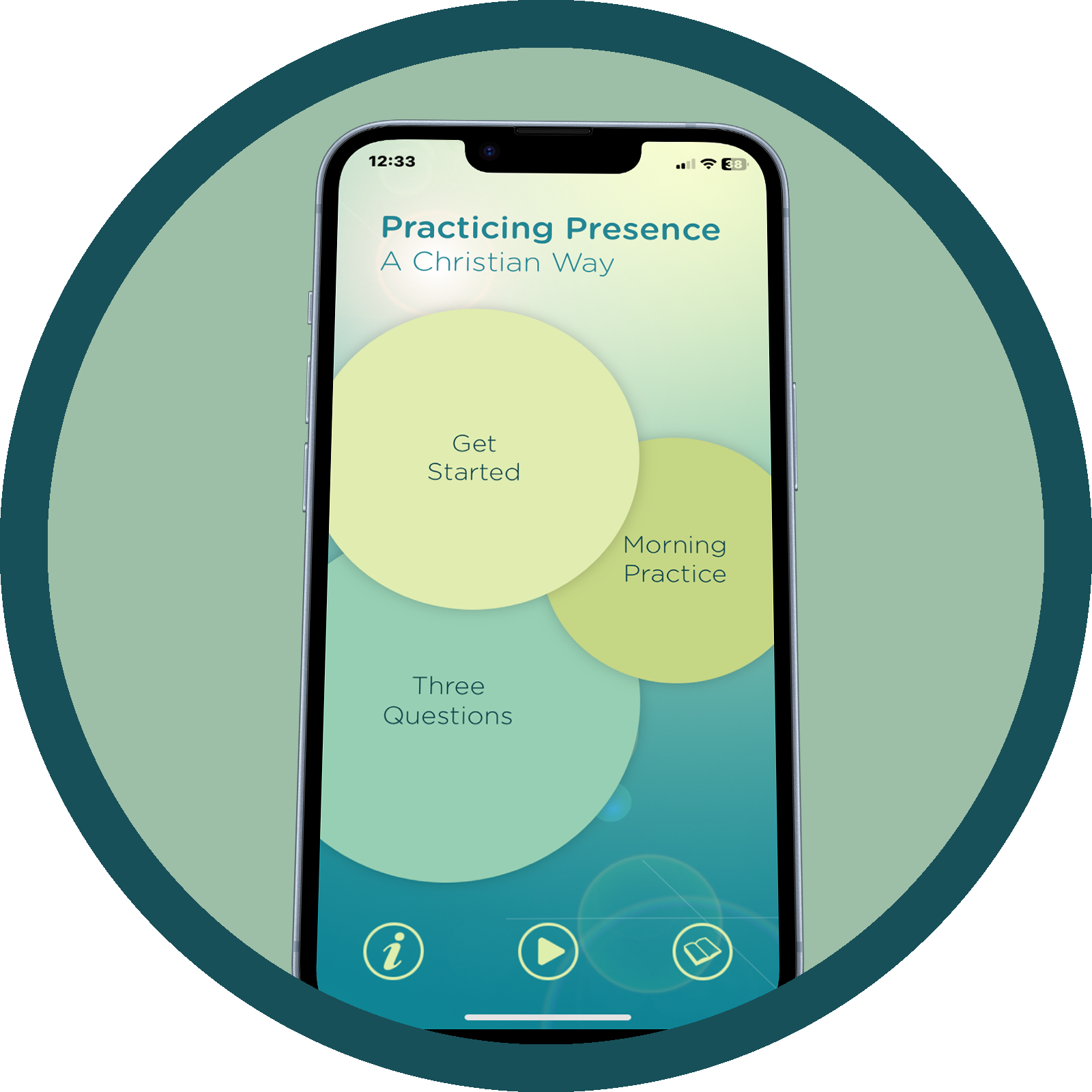
To help sustain the rhythm of your breathing, we invite you to download the Practicing Presence mobile app. Use it to set the hourly reminders that will ground you throughout your day. Set hourly reminders. Nothing more is required. Presence takes care of the rest.
The Practice of Presence is a spiritual discipline focused on bringing stillness into daily life to break the cycle of unconscious negativity. By slowing down the inner dialogue, individuals can move from simply believing in God's presence to experiencing it as a vibrant inner reality. This donation will support Illuman in creating the sacred spaces where men can practice this stillness together.
The Choosing Presence Project provides resources, including a primary text by Jim Heaney and the "Practicing Presence" mobile app, to help individuals cultivate a rhythm of meditation and centering. Based on Christian contemplative traditions, the project emphasizes "living your way into a new way of being" through the experience of stillness.
Illuman is a community of men who are seeking a life, not just for themselves, but for the world. Founded on the work of Fr. Richard Rohr, Illuman offers honest, authentic conversations and shared experiences to help men find strength, healing, and clarity through the "Journey of Illumination."
Brian Mueller, Choosing Presence Director of Education & Engagement
