
Reclaiming the Mind: Michael Pollan on Consciousness, Presence, and the Yearning for Inner Sovereignty
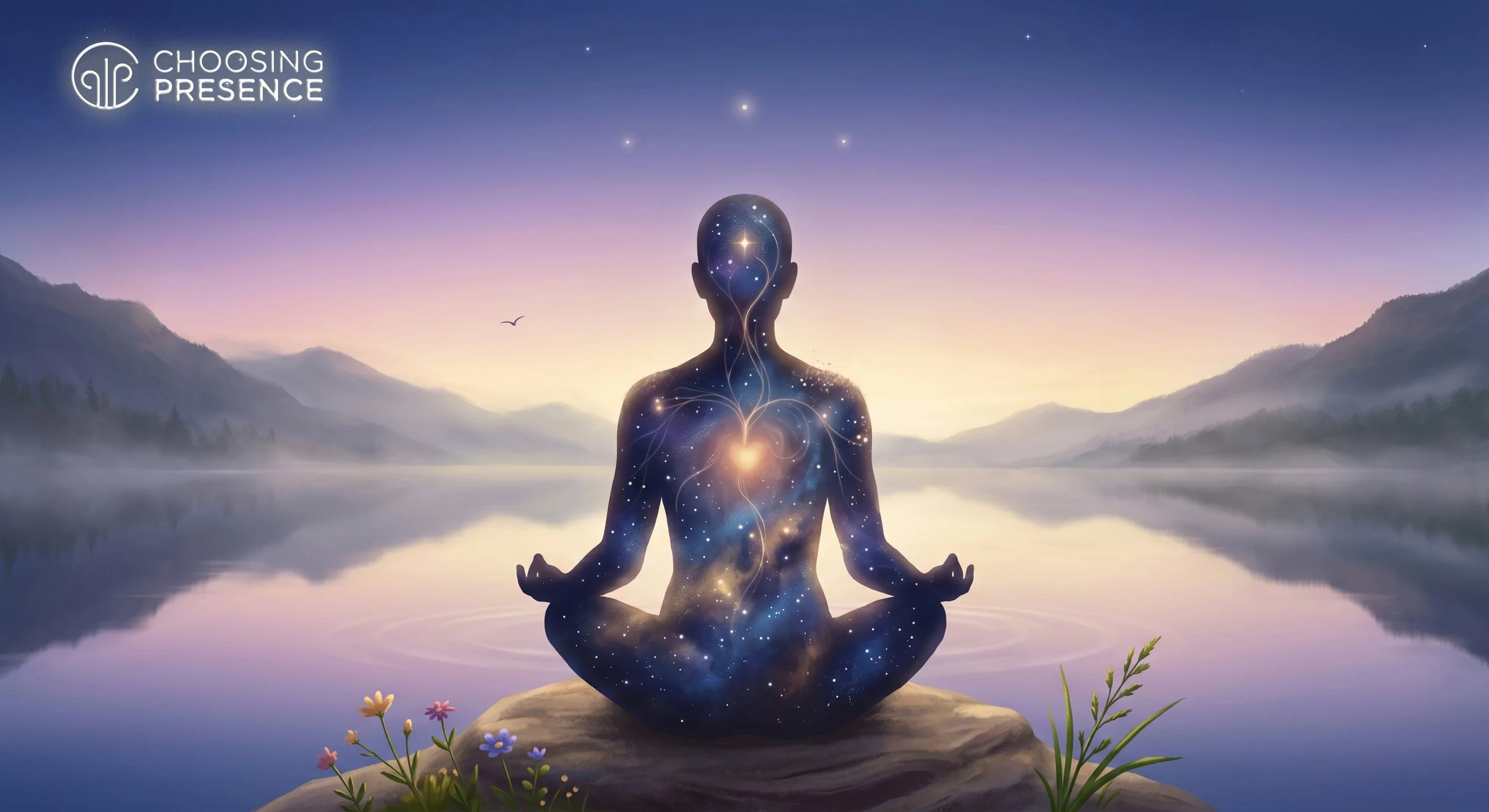
n a recent conversation on The Ezra Klein Show, science writer Michael Pollan discusses his new book, A World Appears: A Journey Into Consciousness — a sweeping exploration of the most intimate and most mysterious phenomenon we know: our own awareness. The paradox at the heart of the discussion is one Pollan names early: consciousness is the only thing we have direct, first-hand experience of, and yet the closer we look at it, the less we understand it. The more language tries to pin it down, the more it slips away.
Pollan and Klein move through a remarkable terrain — from a beeper experiment that captures the "gossamer wisps of mentation" that drift through ordinary thought, to William James's stream of consciousness, to anesthetized plants, animal sentience, and the surprising humility of leading neuroscientists who, after psychedelic and contemplative experiences, have begun to wonder whether the brain generates consciousness or merely receives it. They examine the trade-off between the narrow "spotlight consciousness" of focused, productive adulthood and the wider "lantern consciousness" of children — a wider awareness many of us have unknowingly traded away to keep up with the demands of modern life.
But the conversation's deepest current is not academic. It is profoundly personal — and profoundly relevant to anyone who has felt the strange pressure of contemporary life on their inner world. Pollan describes our moment as one in which our consciousness is "under pressure from everyday life, capitalism, and the need to succeed." Phones, algorithms, endless to-do lists, and a media environment engineered to capture our attention have crowded out the very interiority that makes us human. We are, he suggests, increasingly thinking other people's thoughts. Even sleep is now a competitor for streaming services. In response, a quiet but unmistakable yearning has emerged — a longing to take back what Pollan calls "sovereignty" over our own minds.
This is precisely the yearning that the Practice of Presence, as taught in Jim Heaney's book Choosing Presence: How to Access God's Peace and Release Fear, Anxiety, and Stress, was created to answer. Pollan turns toward "consciousness hygiene" — meditation, time in nature, mind-wandering, the body's wisdom, the willingness to sit alone in a room with oneself. The Practice of Presence offers a Christian contemplative path into that same territory: a daily rhythm of stillness, mindful breathing, and three simple questions — Am I at peace now, and do I know why? If not, do I know why? Do I know how to get back to peace? — that gently return us from compulsive thinking to the quiet presence of God in the here and now.
What Pollan articulates as a cultural and scientific reawakening, the Practice of Presence has long offered as a lived spiritual discipline. Both point in the same direction: away from the frantic, narrowed, screen-tethered self and toward something older, deeper, and more alive. The mind, Pollan suggests, may be less a closed box than an open antenna — and the closing chapter of his journey, spent alone in a cave at Joan Halifax's Upaya retreat, ends not with a theory but with awe. "Why aren't I being more present?" he asks himself under a vault of stars. It is the question of our age. And it is the question the Practice of Presence has been waiting to help us answer.
You can learn more about Michael Pollan's A World Appears on his website.
Choosing Presence is an Illuman Partner Program.
Brian Mueller – Poet, Community Organizer, and Spiritual Guide

Brian Mueller is a poet and community organizer based in Dayton, Ohio. He serves as Director of Education & Engagement for ChoosingPresence.org and is an active member of the Ohio Chapter of Illuman, where he co-leads writing retreats that support men’s spiritual journeys. As a writer, Brian is known for his candid, accessible poetry, with works including Cock‑A‑Doodle‑Doo: 100 Morning Haiku, the Poem of the Day series, and the Bull Series. Inspired by poets like Rumi and Mary Oliver, he believes everyone carries the voice of a poet within.
